

Book a Bangkok canal boat tour lasting 2 hours, with an English-speaking guide, a stop at Baan Silapin and views of Wat Paknam.
View experienceHow to get around Bangkok by combining train, boat and taxi
For a first trip, the best strategy is usually simple: use the BTS Skytrain and MRT for longer distances, Chao Phraya boats for riverside areas, and taxis or apps like Grab when your destination is far from a station. The common mistake is thinking something is “close” because it looks like only a few kilometers on the map. In Bangkok, a short distance can turn into an hour if it coincides with rain, rush hour, or a blocked avenue.
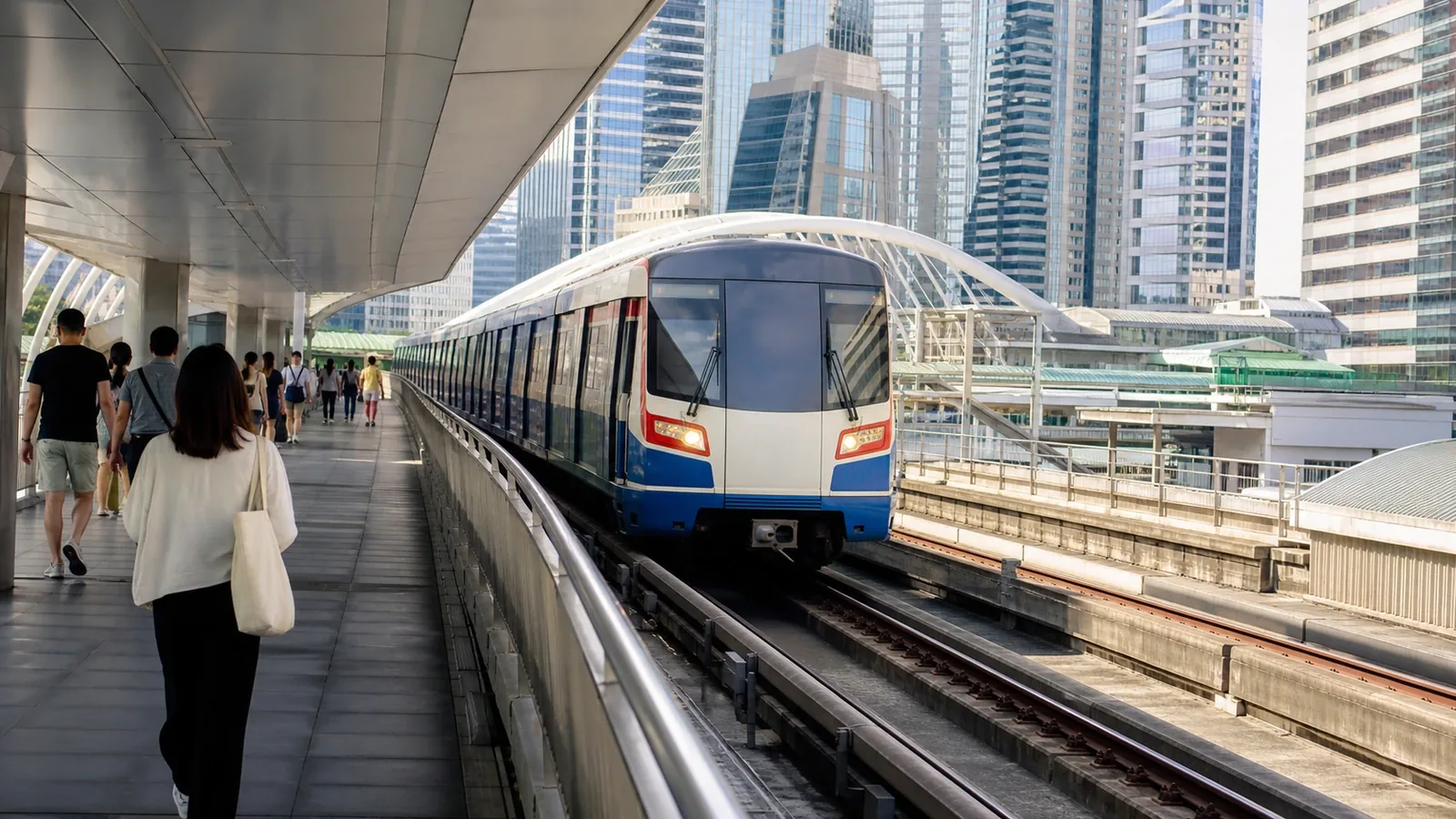
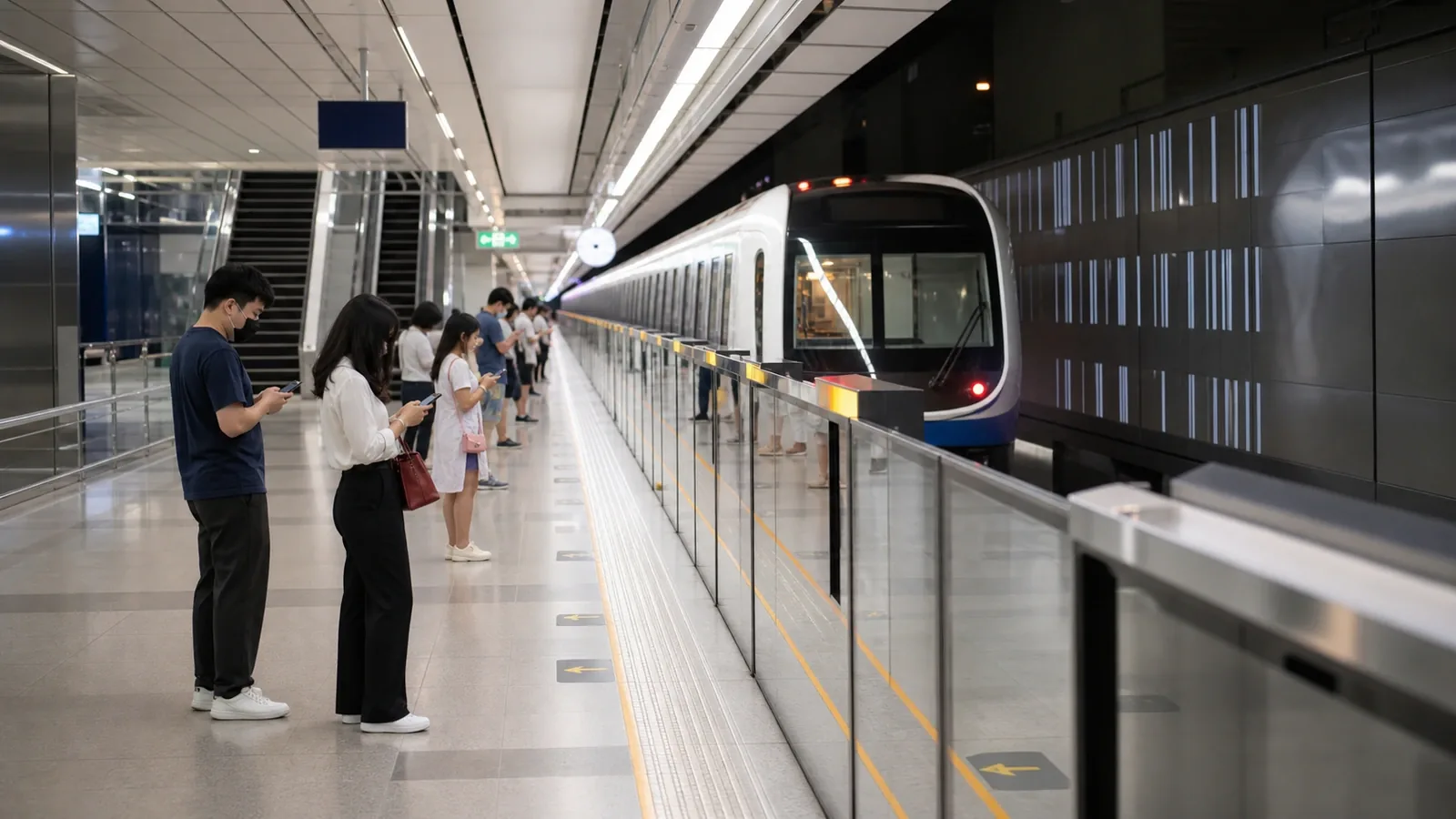
The BTS works especially well for areas such as Siam, Silom, Sukhumvit, Chatuchak, and Saphan Taksin. The MRT is very useful for reaching places like Chinatown, Hua Lamphong, Chatuchak, and several neighborhoods that are less obvious to travelers. On the MRT Blue Line and Purple Line, payment with EMV contactless cards from networks such as Visa, Mastercard, or UnionPay is accepted, according to information from BEM/MRT.
metro.bemplc.co.th
In Bangkok, the best strategy is combining transport: train for distance, boat for the river and taxi for the final stretch.
Do you need to rent a car in Bangkok?
For most travelers, no. Renting a car in Bangkok usually creates more problems than freedom: heavy traffic, difficult parking, demanding driving conditions, and signage that can be confusing if you do not know the city. It only makes sense if you are heading to outlying areas or planning a route outside Bangkok. Even then, hiring a driver or combining trains, taxis, and organized tours often works out better.
Inside the city, a car does not give you rhythm; it takes it away. Bangkok feels easier when public transport handles the long distances and taxis are saved for the moments when they really help.
Inside Bangkok, renting a car rarely saves time.
How to get from the airports to central Bangkok
From Suvarnabhumi Airport, the Airport Rail Link is a practical option if your accommodation is near Phaya Thai, Makkasan, or a BTS/MRT connection. The airport’s own website states that the station is on level B1 and that the Airport Rail Link operates from 05:30 to 24:00.
suvarnabhumi.airportthai.co.th
The official taxi is also convenient if you arrive with luggage, at night, or in a group. At Suvarnabhumi, taxis are available 24 hours a day on level 1, and the airport also lists Grab, AOT Limousine, public buses, vans, and the shuttle between Suvarnabhumi and Don Mueang as transport options.
suvarnabhumi.airportthai.co.th
From Don Mueang, the easiest option is usually a taxi or app-based transport if you do not want to complicate things, although the airport also lists public buses, taxis, public vans, and car rental.
donmueang.airportthai.co.th
BTS and MRT: fast, clean, and not always integrated
The elevated train and metro are the friendlier side of Bangkok transport: air conditioning, frequent service, clear stations, and a sense of order that contrasts with the street outside. But there is one important thing to know: the BTS and MRT are not exactly the same system. At some interchange stations, you have to exit, walk, validate your ticket again, and pay for another section.
For short stays, buy single tickets or use card options when they make sense. The BTS publishes official information on fares and Rabbit cards, but conditions may change depending on sections and promotions.
BTS Skytrain
There is no point obsessing over saving a few baht if it forces you into awkward routes: in Bangkok, the real luxury is avoiding traffic jams and arriving with energy.
Saving a few baht is not worth it if the route forces you into awkward transfers or traffic.
Boats on the Chao Phraya: useful, beautiful, and a little chaotic
Moving along the river is one of the most beautiful ways to understand Bangkok. From the water, temples, old hotels, new towers, modest stilt houses, and piers appear, where daily life comes and goes with bags, umbrellas, and school uniforms.
Chao Phraya boats are especially useful for visiting areas such as Wat Arun, Wat Pho, the Grand Palace, Tha Tien, Phra Athit, and Sathorn. Chao Phraya Express Boat publishes its lines and fares, with services such as the Orange Line, Yellow Line, Green Yellow Line, and Red Line depending on the day and route.
เรือด่วนเจ้าพระยา
The less romantic side: the piers can be confusing, some lines do not operate the same way every day, and it is not always obvious which boat to take. If you are in a hurry, check the route beforehand. If you have time, the river can be one of the best journeys of the trip.
If you are in a hurry, check the boat route beforehand; if you have time, the river can become part of the trip.
Taxis, Grab, and tuk-tuks: when to use them and when not to
Bangkok taxis are useful for door-to-door trips, especially at night, with children, in extreme heat, or when your destination is not close to the train. The sensible thing is to ask for the meter or use Grab to avoid awkward negotiations. At rush hour, however, a taxi can become a motionless capsule.
Tuk-tuks are more of an experience than an efficient mode of transport. For a short ride at sunset, they can have charm. To cross half the city, they are usually expensive, noisy, and less comfortable than the photo promises. It is best to agree on the price beforehand and not use them as your main solution.
Use tuk-tuks as a one-off experience, not as your main way to get around Bangkok.
Can you walk around Bangkok?
Yes, but by neighborhood. Bangkok is not a city designed for long continuous walks. The heat weighs on you, sidewalks change height, and there are cables, motorbikes, food stalls, pedestrian bridges, and crossings that demand patience. Even so, walking is wonderful in areas such as Chinatown, Talad Noi, Ari, some stretches of Silom, the surroundings of the old-town temples, or the side streets of Sukhumvit.
The key is not to try to do everything on foot. Use the train or boat to jump between areas, then walk within each neighborhood to catch markets, temples, cafés, street-food aromas and small scenes you would miss from a car.
Real distances: the map lies
Siam to Sukhumvit may look close. Khao San to Silom may seem reasonable. The Grand Palace and Chinatown look like neighbors. But Bangkok is not measured only in kilometers: it is measured in heat, traffic, transfers, bridges, rivers, shadeless avenues, and schedules.
To plan well, group your visits by area:
Riverside and temple area
Grand Palace, Wat Pho, Wat Arun, Tha Tien, Phra Athit. Best with a boat and some walking.
Modern shopping area
Siam, CentralWorld, MBK, Sukhumvit. Best with the BTS.
Chinatown and Talad Noi
Best with the MRT, boat, or taxi depending on your starting point.
Chatuchak
Easy with the BTS or MRT, especially if you are going to the weekend market.
Plan by area, not only by distance on the map.
Common mistakes when getting around Bangkok
The first is booking “cheap” accommodation far from the BTS or MRT. It may look like a saving, but every outing will require taxis, traffic, and wasted time. The second is trying to visit opposite sides of the city on the same day. Bangkok punishes ambitious itineraries. The third is not having a plan B when it rains: a tropical storm can completely change travel times.
It is also worth carrying small cash for boats, taxis, or unexpected situations, even though digital payments are increasingly common. And do not underestimate fatigue: getting around Bangkok takes more energy than it seems.
Accommodation far from the BTS or MRT can cost you more in time, traffic and fatigue.
The best way to get around depending on the type of traveler
If it is your first time, stay near the BTS or MRT and use taxis only for the final stretch. If you want to see temples and local life, combine the MRT, boat, and short walks. If you are traveling with children or older people, reduce transfers and prioritize taxis outside peak traffic hours. If you want to save money, Bangkok public transport can work very well, but it requires patience and good planning.
Bangkok rewards flexible travelers. Do not try to master it completely. Learn its rhythm: train when the traffic roars, boat when the river brings you closer, taxi when your body can no longer take it, and slow steps when a street smells of basil, gasoline, incense, and ripe mango. There, between chaos and beauty, the city begins to make sense.