

Book your Córdoba equestrian show ticket with Andalusian horses, dressage and flamenco at the Royal Stables. Around 70 minutes of live culture.
View experienceCórdoba in 1 Day: An Essential Itinerary Without Rushing Too Much
One day in Córdoba is enough to fall in love with the city, but not enough to know it fully. It is best to accept that limitation from the start and choose carefully.
Start early at the Mosque-Cathedral. It is the emotional heart of Córdoba: a forest of columns, red-and-white arches, cool half-light, and centuries layered one upon another. Do not visit it as if you were simply ticking a monument off a list. Give it time, because its impact lies not only in its size, but in the strange and powerful coexistence of the former mosque and the Christian cathedral.
Afterwards, enter the Jewish Quarter: Calleja de las Flores, the area around the Synagogue, small squares, whitewashed façades, and corners where the city seems to fold in on itself. It is a beautiful area, although in high season it can lose some of its intimacy because of the number of groups and guided tours.
At midday, the wisest thing to do is stop. Córdoba does not reward travelers who try to do everything in one go, especially from late spring through summer. Look for a traditional tavern and try dishes such as salmorejo, flamenquín, or aubergines with honey. It is better to eat early or book ahead, as the most central areas can fill up quickly.
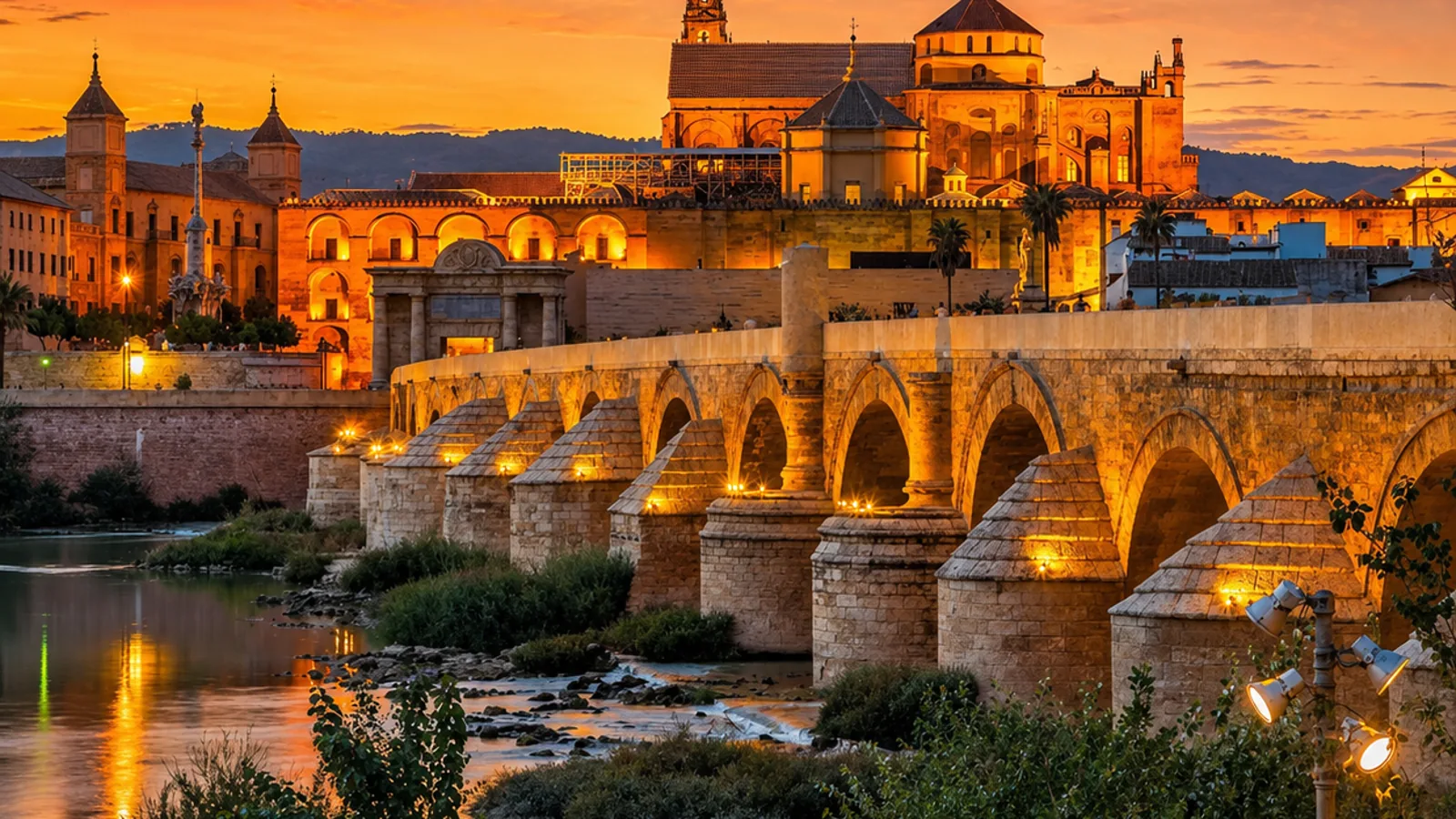
In the afternoon, visit the Alcázar of the Christian Monarchs if you are interested in history and gardens. Then head down toward the Guadalquivir River and cross the Roman Bridge. The view of the city from the other side, with the Mosque-Cathedral rising above the walls, is one of the most beautiful moments of the trip.
The usual mistake on a one-day visit is trying to add Medina Azahara. It can be done if you get up very early, but it is not the best option: Córdoba deserves more than a monumental race.
Córdoba in 2 Days: The Ideal Route for a First Visit
Two days allow for a much more balanced experience. The city stops being only a collection of monuments and begins to feel like an atmosphere.
Devote the first day to the Mosque-Cathedral, the Jewish Quarter, the Alcázar, the Roman Bridge, and the banks of the Guadalquivir. This is the best-known Córdoba, but also the most essential. Try to alternate interiors with walks so you do not feel overwhelmed.
At night, walk again around the Mosque-Cathedral. When the rush of the day fades, the center recovers some of its mystery.
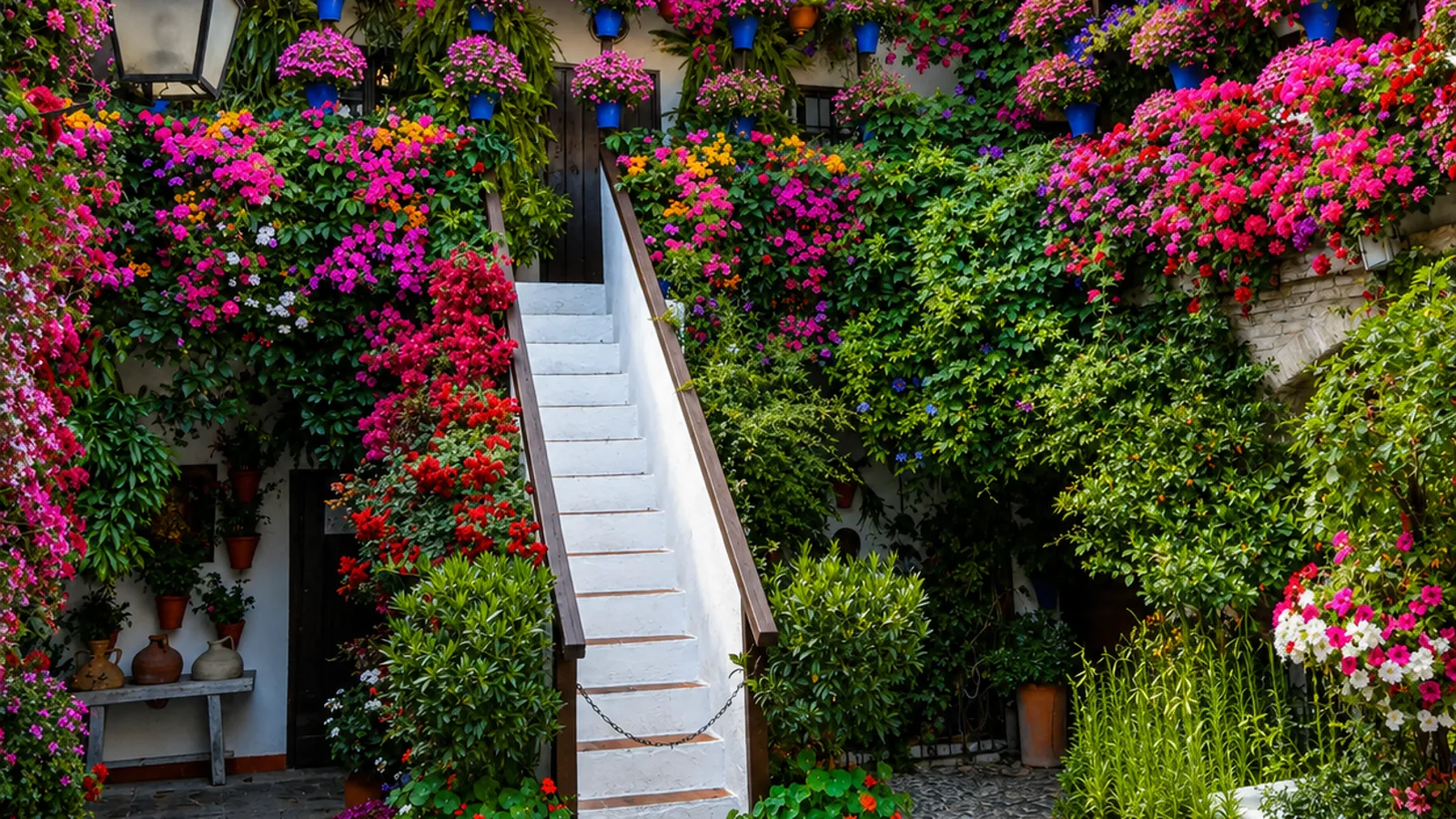
The second day should be slower. Begin in the San Basilio neighborhood, known for its patios. Outside the festival, not all of them are open, but even so, the neighborhood preserves a very special domestic scale: white walls, flowers, silence, the scent of limewash and geraniums.
Then continue toward squares such as Plaza del Potro or Plaza de la Corredera. The latter may come as a surprise: broad, Castilian in form, and very different from the intimate maze of the Jewish Quarter. Not everything in Córdoba is an Andalusi postcard, and that is part of its appeal.
In the afternoon, you can visit the Palacio de Viana if you are drawn to patios, aristocratic architecture, and a less hurried Córdoba. It is a good alternative for those who already feel that the monumental center is too crowded.
Córdoba in 3 Days: Mosque, Patios and Medina Azahara
Three days is probably the most recommendable length for a relaxed first visit.
The first day follows the classic itinerary: Mosque-Cathedral, Jewish Quarter, Alcázar, and Roman Bridge. Do it without adding too much. Córdoba is best enjoyed when you still have energy left at the end of the day.
Devote the second day to San Basilio, the Palacio de Viana, Plaza de la Corredera, Plaza del Potro, and the less obvious streets of the center. Here a more neighborhood-like Córdoba appears, one of discreet façades and conversations at the bar.
It is also a good day to eat without watching the clock. Cordoban cuisine does not need excessive luxury to leave a memory: it needs good produce, well-made recipes, and a quiet table.
Set aside the third day for Medina Azahara. It lies about eight kilometers from Córdoba, at the foot of the Sierra Morena, and was the palatial city commissioned by Abd al-Rahman III in the 10th century. Córdoba Tourist Board
Do not treat it as a simple archaeological add-on. Medina Azahara needs context: what you visit there is not just any ruin, but the memory of a city of power, refinement, and fragility. If you do not have a car, there is a tourist bus service to the archaeological site, although it is advisable to check schedules and book before organizing the day. Córdoba Tourist Board
In the afternoon, return to Córdoba and do not plan too much. A final walk along the riverbank, a quiet dinner, and one last evening stroll through the historic center are worth more than adding another museum when you are tired.
One Week in Córdoba: A Slow Route with Day Trips
A week in Córdoba is not too much if you want to use the city as a base for discovering its province and part of inland Andalusia. But it needs to be organized well: spending seven days only in the historic center may feel repetitive for some travelers.
Devote the first two days to the historic city: the Mosque-Cathedral, the Jewish Quarter, the Alcázar, the Roman Bridge, San Basilio, the patios, the Palacio de Viana, and the squares of the center. Take it slowly, spacing out the main visits and leaving free time to wander without a goal.
Medina Azahara fits very well on the third day. If possible, visit with a guide or at least do some reading beforehand: without an explanation, part of its greatness may go unnoticed.
Use the fourth day to move away from the most obvious circuit: Fernandine churches, streets around Santa Marina, traditional taverns, markets, and squares where Córdoba feels less like a stage set and more like a lived-in city.
With a car, you can devote a day to the mountains, villages in the province, or nature routes. Without a car, the options are more limited and require more careful planning. Córdoba city is walkable; the province, not so much.
The sixth day should have fewer monuments and more local life. A slow breakfast, a brief visit, a long lunch, and a shaded afternoon can say more about Córdoba than an overloaded schedule.
The last day should not be about accumulation, but about returning: going back to a street, a tavern, a view over the river. Historic cities are remembered better when you repeat them a little.
Best Córdoba Route According to Traveler Type
If this is your first visit, prioritize the Mosque-Cathedral, the Jewish Quarter, the Alcázar, the Roman Bridge, the patios, and Medina Azahara if you have three days.
If you are traveling as a couple, leave room for sunset walks, unhurried dinners, and staying inside or near the historic center.
If you are traveling with children, avoid the hottest hours of the day and alternate monuments with breaks. Córdoba can be hard on them if the trip becomes a succession of long visits.
If you are traveling in summer, lower your expectations around midday. The city can be scorching, and the itinerary should adapt: early mornings, a siesta or rest, and long evenings.
If you are looking for a less touristy Córdoba, avoid peak hours in the Jewish Quarter and spend time in neighborhoods and squares away from the Mosque–Roman Bridge axis.
Mistakes Worth Avoiding
The first mistake is visiting Córdoba as a quick day trip without spending the night. It can be done, but the city changes greatly at dusk, when the heat drops and the streets regain their silence.
The second is trying to see everything on foot without breaks. The center is compact, but the cobbled ground, the sun, and the queues are more tiring than expected.
The third is leaving the Mosque-Cathedral for just any time of day. It is better to see it with energy, not at the end of an exhausting day.
The fourth is underestimating Medina Azahara. It is not in the center and requires logistics. Improvising it can turn a great visit into an uncomfortable experience.
How Many Days Does Córdoba Deserve?
Córdoba deserves at least one night. In one day you will see the essentials, but you will probably feel that the city has slipped away from you. With two days, you will have a very complete first visit. With three, you can add Medina Azahara without forcing it. With a week, Córdoba becomes a calm base from which to look at Andalusia at a different pace.
This is not a city for those seeking grand avenues, intense nightlife, or constant novelty. Its beauty is older, more mineral, more silent. Córdoba does not try to dazzle at every step; sometimes it simply leaves a door ajar, a cool patch of shade, a hidden patio, a stone turned golden by the sun. Those who travel in a hurry will see monuments. Those who give it time begin to hear it.