

Book your Córdoba equestrian show ticket with Andalusian horses, dressage and flamenco at the Royal Stables. Around 70 minutes of live culture.
View experienceWhy Córdoba is worth visiting
Córdoba has a rare quality: it concentrates centuries of history into a relatively small, easily walkable area. In just a few hours, you can go from the silence of a medieval synagogue to the forest of columns inside the Mosque-Cathedral, from a Roman bridge over the Guadalquivir to a tavern where salmorejo arrives at the table with glossy olive oil and crisp bread.
The city was Roman, Islamic, Jewish, and Christian, and that blend does not feel like a textbook lesson, but rather like an atmosphere. It is there in the arches, in the narrow lanes of the Jewish Quarter of Córdoba, in the whitewashed patios, in the neighbours’ courtyards that burst into flower in spring, and in the way the stone seems to hold memories of heat, water, and silence.
Its main appeal is that it does not require long journeys. Córdoba is understood on foot. It is not a city to be seen from a sightseeing bus, but one in which to get a little lost, accept detours, wander into an unnamed square, and sit in the shade when the day grows heavy.
The best things to see in Córdoba
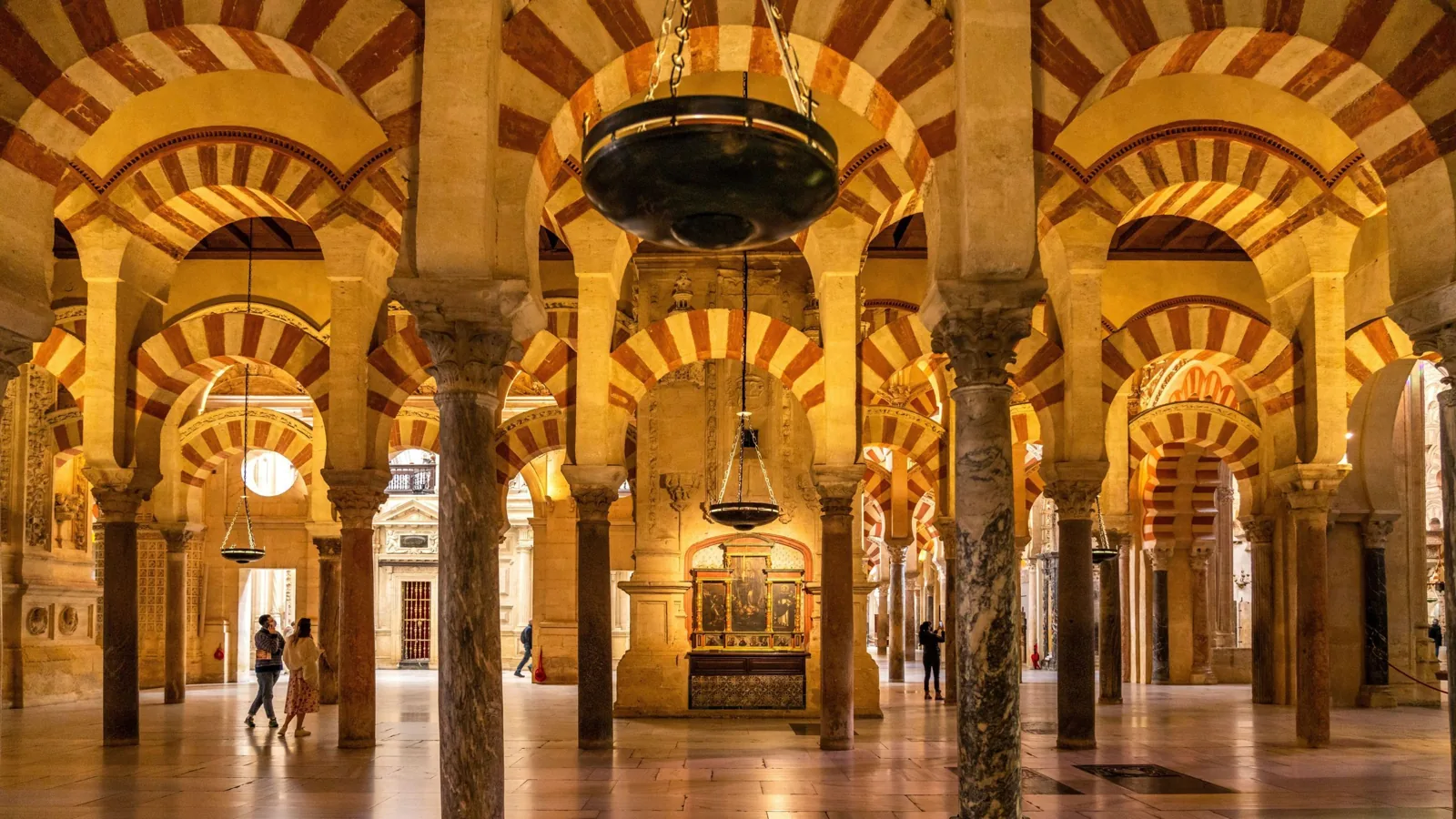
The best of Córdoba is its historic centre, one of those places where travellers feel that time has gathered in layers. The Mosque-Cathedral alone justifies the journey: not only for its artistic importance, but for the physical emotion of entering that space of columns, striped arches, and filtered light. It is a place that impresses even those who think they are prepared.
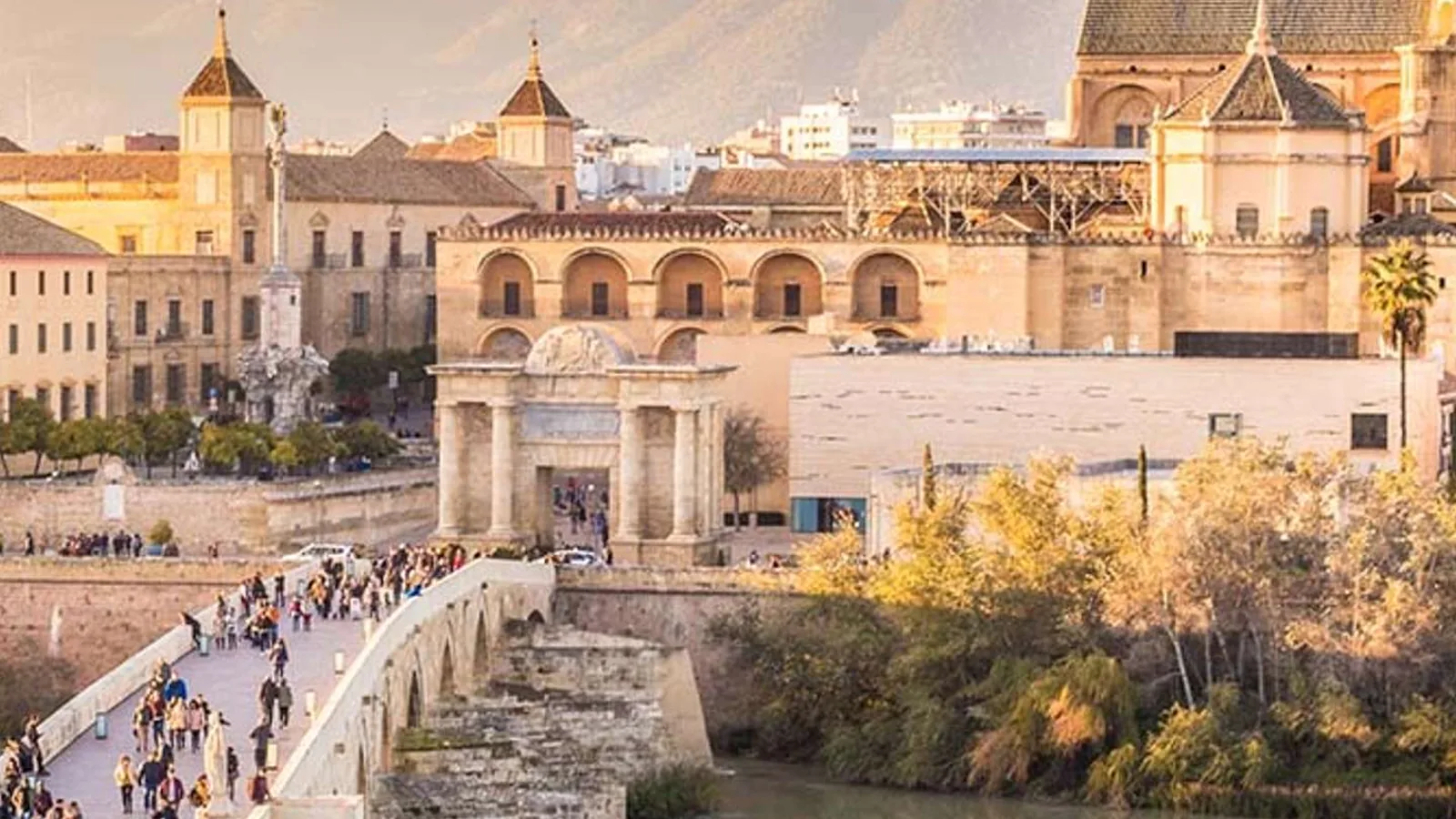
Also outstanding are the Roman Bridge, the Jewish Quarter, the Alcázar of the Christian Monarchs, the Royal Stables, the traditional taverns, and, of course, the patios. In spring, when the pots fill with geraniums, carnations, and bougainvillea, Córdoba shows its most photogenic side. But even outside that season, the city’s domestic architecture retains its charm: half-open doors, cool entrance halls, green iron grilles, white walls, and that murmur of water that softens the heat.
Food is another strength. Córdoba does not need artifice to win you over: salmorejo, flamenquín, aubergines with honey, oxtail stew, Montilla-Moriles wines, and taverns where people still eat with a serious kind of simplicity. Not everything will be memorable, especially in the most touristy areas, but with a little discernment the city is quite rewarding.
What may disappoint
Córdoba is not a perfect city for everyone. In high season, the area around the Mosque-Cathedral and the most famous streets of the Jewish Quarter can fill with groups, organised tours, and souvenir shops. The experience changes greatly if you visit first thing in the morning or towards the end of the afternoon, when the city regains some of its intimacy.
Heat is another important factor. In summer, Córdoba can be exhausting, especially for those travelling with young children, older people, or anyone with little tolerance for extreme temperatures. In July and August, the trip requires adjusting your schedule, resting during the middle of the day, and not trying to see everything on foot under the sun.
It may also disappoint anyone expecting a large, cosmopolitan city or nightlife comparable to Seville or Málaga. Córdoba is more self-contained. Its charm lies in contemplation, history, and details, rather than in constant urban energy.
The experience changes greatly if you visit first thing in the morning or towards the end of the afternoon, especially around the Mosque-Cathedral and the Jewish Quarter.
Who is Córdoba worth it for?
Córdoba is very much worth visiting for travellers who enjoy heritage, architecture, and cities best explored on foot. It is ideal for couples, cultural breaks, relaxed trips through Andalusia, and people who want to combine beauty, history, and good food without needing to cover great distances.
It is also a great choice for those travelling to southern Spain for the first time and wanting to understand an essential part of Andalusian history. On an Andalusian itinerary, Córdoba works very well as a stop between Seville and Granada, or as a getaway from Madrid thanks to its rail connections.
For photographers and lovers of detail, the city offers a great deal: patios, shadows, alleyways, arches, doors, tiles, flowers, sunsets over the Guadalquivir. Its beauty is not wild or spectacular in a scenic sense, but one of texture and closeness.
Who might Córdoba not be worth it for?
Córdoba may not be the best option for those seeking beaches, major contemporary museums, luxury shopping, intense partying, or several days of varied activities. Nor is it the most comfortable destination in the height of summer for those who want to walk without organising their day around the heat.
If a traveller has very little time in Andalusia and already has Seville and Granada in mind, Córdoba may feel like a shorter visit. Even so, skipping it altogether would be a pity for anyone with an interest in history and architecture. The key is to adjust expectations: Córdoba does not need a week to reveal its essentials, but it deserves more than a rushed two-hour visit.
How many days should you spend in Córdoba?
For a first visit, one full day allows you to see the most important sights, although at a fairly intense pace. Ideally, spend two days: one for the Mosque-Cathedral, the Jewish Quarter, the Roman Bridge, and the atmosphere of the centre; another for patios, the Alcázar, taverns, less obvious squares, and a slower walk.
Three days make sense if you want to travel without rushing, visit more monuments, eat at a relaxed pace, and perhaps take a nearby excursion. More time can be pleasant, but it is not essential for most travellers.
Is Córdoba expensive?
Córdoba is usually kinder to the budget than other major Spanish tourist cities, although prices rise at times of high demand, especially in spring, on certain weekends, and during popular festivities. Staying near the Mosque-Cathedral can be more expensive and less peaceful; moving a little farther away makes it possible to find more balanced options while still being able to walk to the centre.
When it comes to food, the city allows you to spend little or quite a lot depending on the type of trip. There are simple taverns, traditional bars, and more polished restaurants. The most common mistake is sitting down at the first place too exposed to the tourist flow without checking the menu, the atmosphere, or recent reviews.
The best time to visit Córdoba changes the experience
Spring is the most beautiful season for many travellers, especially because of the patios and street life. It is also one of the most sought-after periods, so it is wise to book accommodation in advance. Autumn offers milder temperatures and a more comfortable experience for walking. Winter can be a pleasant surprise: fewer people, clean light, and a more local rhythm, although the days are shorter.
Summer requires caution. Córdoba can still be beautiful, but the heat shapes the trip. At that time of year, it is best to get up early, take long breaks, seek out cool interiors, and leave the main walks for the late afternoon or evening.
In summer, it is best to get up early, take long breaks, seek out cool interiors, and leave the main walks for the late afternoon or evening.
Common mistakes when visiting Córdoba
The first mistake is rushing. Córdoba loses some of its charm when it becomes a list of monuments to tick off in a hurry. The second is visiting the Mosque-Cathedral at the busiest hours and leaving with the impression that the whole city is just as crowded. The third is underestimating the heat, especially from late spring into summer.
It is also worth not limiting yourself to the most photographed part of the Jewish Quarter. Some of Córdoba’s best sensations appear just a few metres away from the obvious routes: a quiet square, a tavern without too much staging, a street where the flowerpots seem to be there not for visitors, but for everyday life.
Verdict: is Córdoba worth visiting?
Yes, Córdoba is worth it, especially if you visit with the right attitude. It is not a city to consume quickly or a place to seek constant stimulation. It is a destination for walking slowly, looking carefully at the patios, entering the Mosque-Cathedral without rushing, and letting evening fall over the Guadalquivir.
It is worth visiting for those seeking a cultural break of immense beauty, living history, and human scale. It may feel limited for travellers who want beaches, partying, or several days of varied plans. And it can be uncomfortable if visited in the height of summer without adjusting your schedule.
Córdoba does not need to promise everything. Its greatness lies in something more subtle: in making a small city seem to contain several worlds. And for many travellers, that is reason enough to go.