
Short and exciting jet ski experience on a sea racing track, with boat transfer, safety briefing, fuel and photos included.
View experienceWhat makes Mallorca special?
What makes Mallorca special is its variety. In one day, you can walk through Palma’s old town, swim in a turquoise cove, have lunch in an inland village and end the evening watching the sunset from a viewpoint in the Serra de Tramuntana.
The island has a very recognisable light: golden stone façades, green shutters, ancient olive trees, mountains falling into the sea and small ports where the Mediterranean seems calmer than it really is in high season. This mix of sea, countryside and mountains gives Mallorca more depth than many other beach destinations.
It also has a very touristy side, and that should be said. Some areas are overdeveloped, certain restaurants rely more on location than quality, and in summer the most famous places can lose part of their charm because of the crowds. Mallorca is beautiful, but not always intimate.
Mallorca is beautiful, but not always intimate.
Is it for beaches, culture, nature, nightlife, food, relaxation, adventure, families or couples?
Mallorca works for many types of trips, as long as you choose the right area.
For beaches, it is one of Spain’s most attractive destinations. It has small coves, long sandy beaches, clear water and very photogenic stretches of coast. Still, the most famous coves fill up early, so it is better not to imagine a lonely island in July or August.
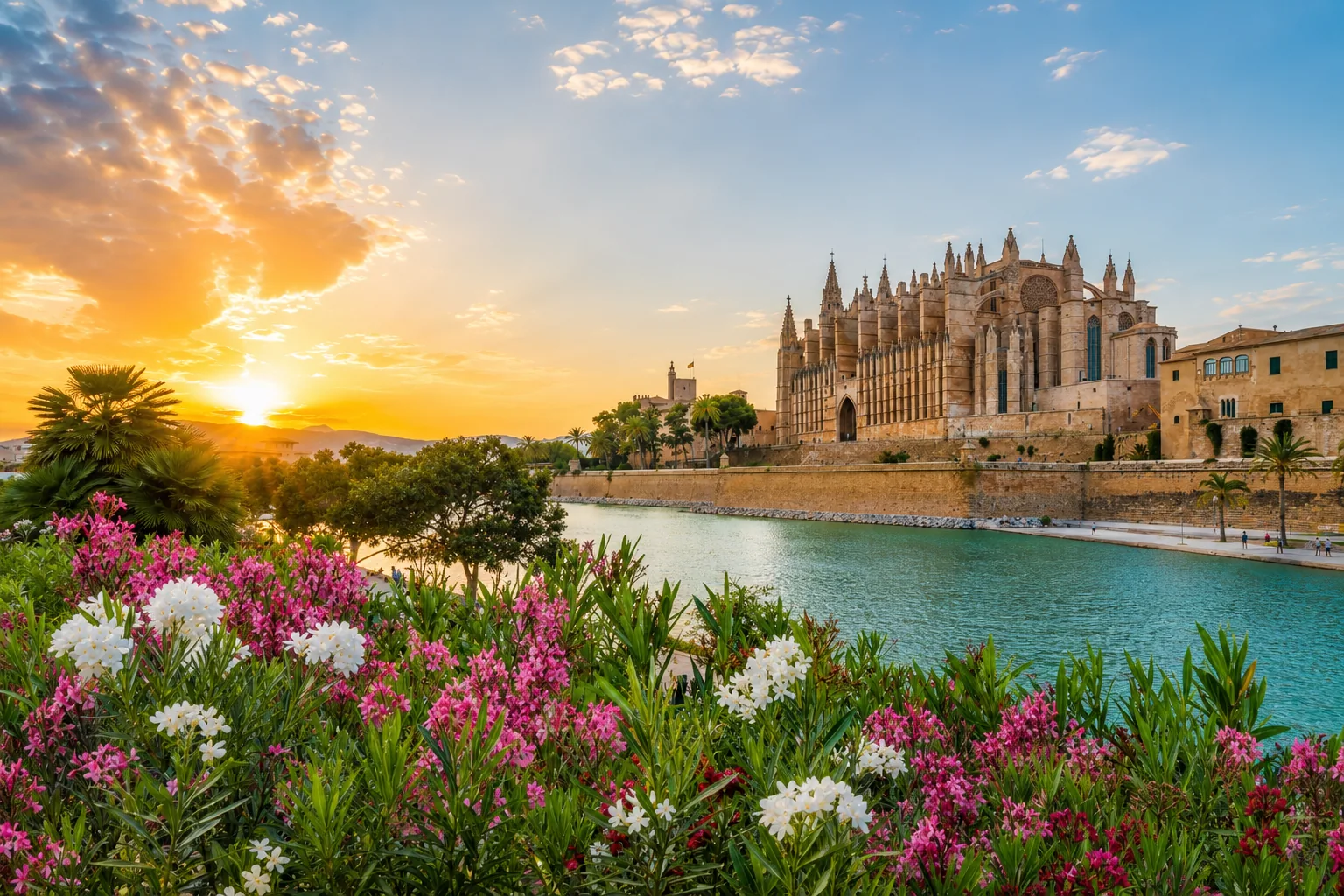
For culture, Palma is more surprising than many people expect. The Cathedral, the old town, historic courtyards, Arab Baths, galleries, small shops and lively squares make the capital worth at least a full day. Villages such as Valldemossa, Sóller, Deià, Pollença, Alcúdia and Artà reveal a slower, more traditional Mallorca.
For nature, the Serra de Tramuntana is essential. It is a more mountainous, scenic and elegant Mallorca, ideal for driving slowly, walking, stopping at viewpoints and understanding that the island is not only sand and sunbeds.
For nightlife, it also works, but only in specific areas. Magaluf and parts of Playa de Palma have a louder, more international party atmosphere. It can be fun if that is what you want, but disappointing if you are looking for calm or authenticity.
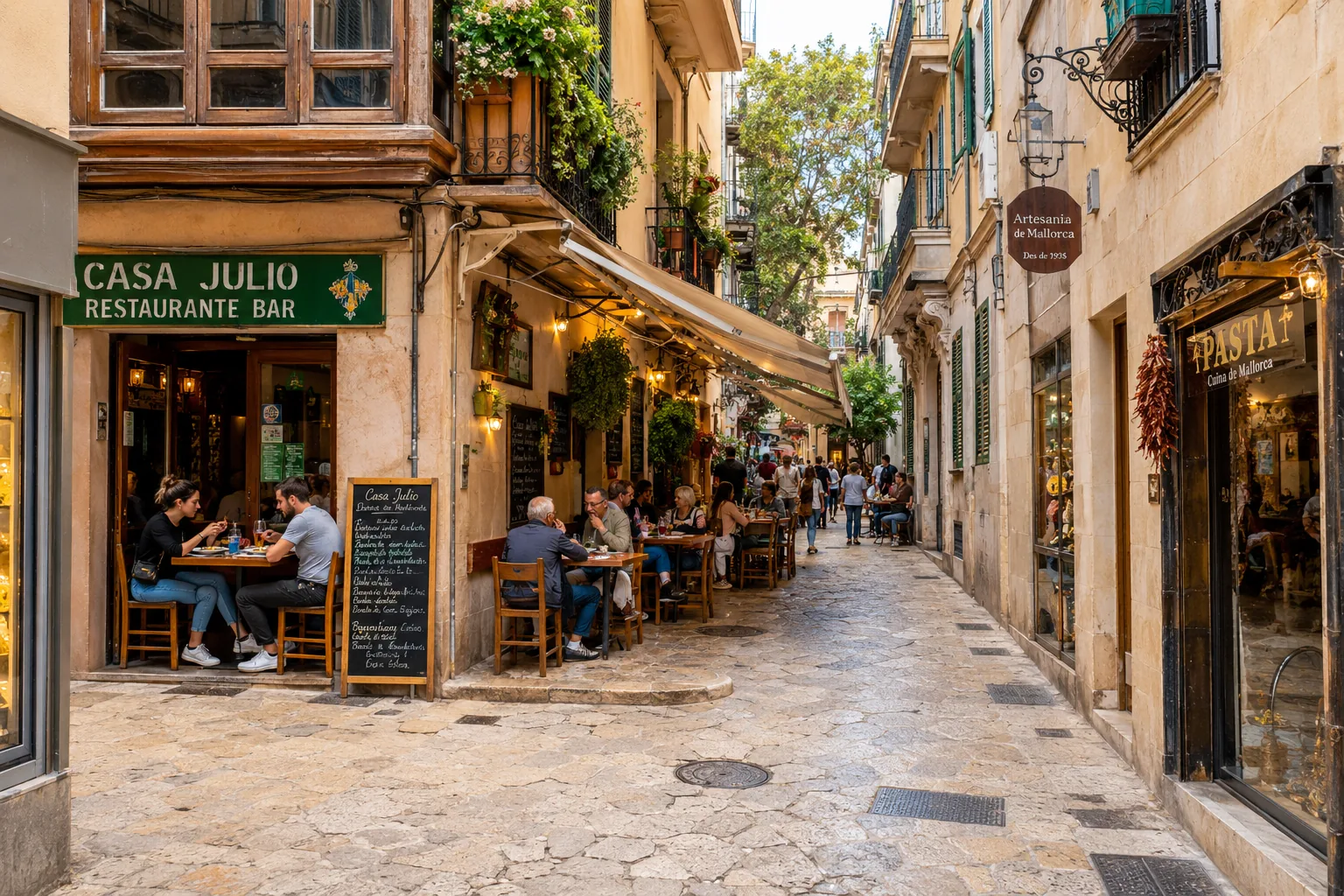
For food, Mallorca offers far more than tourist restaurants. There are ensaimadas, sobrasada, tumbet, rice dishes, fish, cocas, garden produce, local wines and markets where the everyday island is easier to enjoy.
For relaxation, couples and families, it can be excellent. You simply need to avoid staying in overly noisy areas if rest is what you want.
Why do people travel to Mallorca?
People travel to Mallorca because it is convenient, beautiful and complete. It has good connections, a wide range of accommodation, famous beaches, charming villages and plans for almost every kind of traveller.
It also appeals because it allows many different travel styles. You can spend a week on the beach without complications, take a romantic break through mountain villages, enjoy a family holiday in the north, plan a food-focused trip through markets and restaurants, or drive around looking for coves and lighthouses.
The problem is that this same popularity has made the island very busy. In high season there is traffic, high prices, full car parks and beaches where arriving early matters. Mallorca is worth it, but it is not always as enjoyable if you improvise too much.
Mallorca is worth it, but it is not always as enjoyable if you improvise too much.
Things to see in Mallorca: what should you not miss?
On a first visit, you should not miss Palma and its Cathedral, the old town, Valldemossa, Sóller, Port de Sóller, at least one part of the Serra de Tramuntana, Formentor, Alcúdia, Pollença and at least one cove in the southeast or northeast.
It is also worth visiting a local market, trying a good ensaimada, driving through mountain roads slowly and watching the sunset on the west coast. Mallorca is remembered for its landscapes, but also for simple moments: a table under a vine, a road lined with olive trees, a cove at the end of a path, a village square in the late afternoon.
What you should not do is try to see everything. The island looks manageable on a map, but distances, traffic, narrow roads and stops quickly fill the day. It is better to choose well than to rush.
It is better to choose well than to rush.
Is Mallorca expensive or cheap?
Mallorca can be expensive, especially in high season. July and August usually bring high prices for hotels, rental cars, beach clubs, seafront restaurants and well-located accommodation. If you travel without booking, you will normally pay more and have fewer good options.
Still, not everything in Mallorca is luxury. You can travel on a more moderate budget if you choose May, June, September or October, stay outside the most exclusive areas, eat in local places, shop in markets and do not base the whole trip on restaurants right by the sea.
It is not a cheap island compared with less touristy destinations, but it does not have to be unaffordable. The key is the season, the area and the style of travel.
How many days do I need in Mallorca?
For a first trip, 5 to 7 days is ideal. With a week, you can combine Palma, villages, coves, the Tramuntana and a slower plan without always feeling rushed.
With 3 days, you can have a beautiful short break, but you will need to choose. For example, Palma, Valldemossa, Sóller and a nearby cove. Trying to cross the whole island in a weekend usually turns the trip into a race.
With 10 days, Mallorca is much easier to enjoy. You can change bases, spend a few nights near Palma or in the Tramuntana and others in the north or east. This reduces driving time and lets you discover the island more calmly.
Is it better for couples, families, friends or solo travellers?
Mallorca is very good for couples. It has charming hotels, romantic villages, sunsets, coves, pleasant restaurants and routes that are perfect for a slow trip.
For families, it also works very well, especially in areas such as Alcúdia, Playa de Muro, Port de Pollença, Cala Millor or parts of the east coast. There are comfortable beaches, services, family-friendly accommodation and easy excursions.
With friends, it can be a great destination if you want beaches, a car, restaurants, atmosphere and some nightlife. You just need to choose the area carefully, because looking for party and looking for peace are very different trips.
For solo travel, Mallorca is also a good option. Palma is comfortable for moving around, eating, walking and enjoying cultural plans. If you want to explore coves, villages and mountains, renting a car gives you much more freedom.
Who might not enjoy Mallorca as much?
Mallorca may not be the best choice for those looking for a cheap destination in the middle of summer, empty beaches without waking up early, total spontaneity in August or a completely authentic island untouched by tourism.
It is also not ideal for travellers who do not want to drive but hope to reach many hidden coves and mountain villages in just a few days. You can travel without a car, especially if you stay in Palma or well-connected areas, but the experience changes a lot.
If crowds bother you, avoid July and August. If very touristy destinations disappoint you, you need to choose your areas carefully. If you are looking for absolute silence, stay away from the most famous resorts and choose the interior, the quieter north or some villages in the Tramuntana.
Mallorca is worth visiting when approached with realistic expectations. It is a beautiful, varied and luminous island, but also popular, expensive at certain times and very visited. Its best version appears when you do not try to consume it all, but live it slowly: an early cove, a village at sunset, a mountain road, a simple table and the sea always nearby.
Its best version appears when you do not try to consume it all, but live it slowly.