

Book a Marrakech sunrise hot air balloon ride with pickup, a professional pilot, desert views, palm groves, and a traditional Berber breakfast.
View experienceBest time to visit Marrakech: spring and autumn
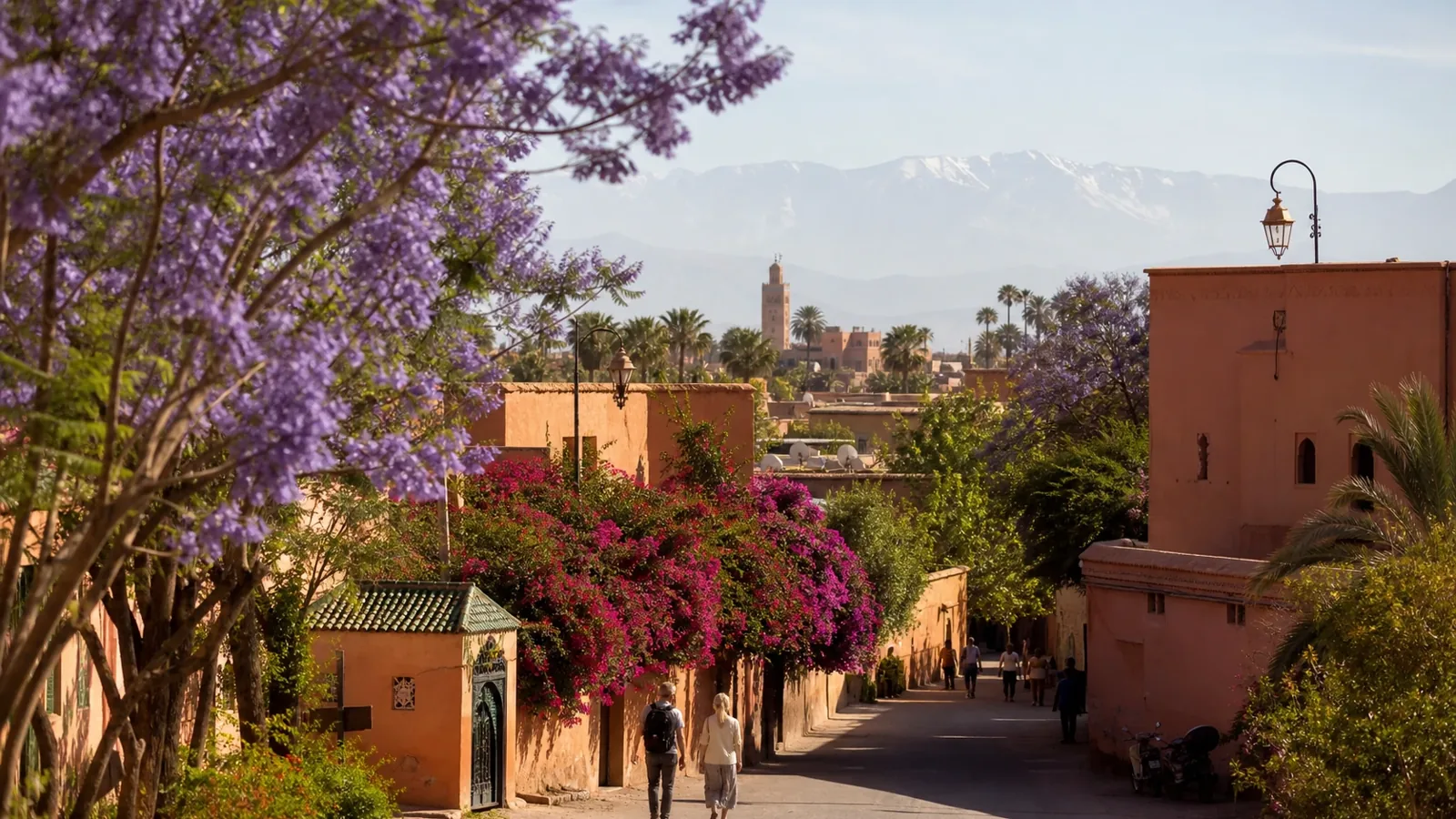
Spring is perhaps the most seductive time to discover Marrakech for the first time. The light still has a clean softness to it, bougainvillea spills over the walls of the riads, and gardens such as Majorelle or Menara can be enjoyed without the harshness of summer. Morocco’s National Tourism Office highlights Jemaa el-Fna square, the Majorelle Garden, El Badi Palace, the Koutoubia and the Menara basin among Marrakech’s essential sights — visits that are far more enjoyable in moderate temperatures than under extreme heat.
March, April and May are highly recommended months for those who want to walk, get lost in the souks, sit on terraces at sunset and take excursions without feeling that the climate is controlling the trip. The less romantic side is that you will not be alone: Easter, European long weekends and spring holidays can bring more visitors, higher prices and fully booked riads if you leave reservations too late.
Marrakech in autumn: the most elegant balance
Marrakech in autumn has a beauty that is less floral and more golden. After summer, the city becomes breathable again. September can still be hot, especially at midday, but October and November usually offer one of Marrakech’s most pleasant versions: long afternoons, open-air dinners, lively souks and more comfortable excursions.
For many travellers, October is the most complete month: less aggressive than July or August, less cold at night than January, and still bright in atmosphere. It is also an excellent time to combine Marrakech with the High Atlas, Essaouira or a route towards the south, always bearing in mind that November may bring more changeable days and some rain, although Marrakech remains a city with moderate rainfall.
Marrakech in summer: only for heat-resistant travellers
Travelling to Marrakech in summer can be cheaper and may mean fewer people at certain times, but there is a clear reason for that: the heat can be tough. July and August are not ideal months for wandering through the medina for hours, bargaining in the souks, visiting open-air ruins or taking full-day excursions. The asphalt, the reddish walls and the narrow streets retain the heat, and the experience can become more tiring than pleasurable.
If you can only travel in summer, it is wise to organise your days carefully: early visits, a long midday break, a pool or a riad with a cool courtyard, and outings at sunset. Marrakech in August can be intense, beautiful and exhausting all at once. It is not the best choice for families with small children, people sensitive to heat or travellers who dream of walking without watching the clock.
Marrakech in winter: a good option, but not always warm
Marrakech in winter often comes as a surprise. During the day it can be pleasant, even sunny, but the nights are cool and many traditional accommodations are not insulated like modern hotels. January and February can work very well for travellers who want to avoid the heat and accept a slightly quieter city, with clear light and slow mornings.
It is not, however, a “guaranteed warmth” getaway. Anyone travelling in search of a pool, sandals all day and mild dinners on a terrace may be disappointed. For visiting monuments, photographing the city in cleaner light and making cultural plans, however, winter can be a sensible choice.
High season, prices and crowds in Marrakech
Marrakech is one of Morocco’s great tourist magnets. The country has welcomed record visitor numbers in recent years and continues to pursue ambitious tourism growth targets, something that can be felt in star destinations such as Marrakech: more air routes, more hotels, more demand and a medina under increasing pressure on popular dates.
The most sought-after periods usually coincide with spring, autumn, Christmas, New Year and European holidays. If you are looking for good riads, charming restaurants or private excursions, it is worth booking well in advance. If you want gentler prices, look at weekdays, winter outside holiday periods or the edges of the season, such as late February, June or early December.
Ramadan in Marrakech and holidays: a different city
Travelling during Ramadan in Marrakech can be an interesting experience, quieter by day and more intense after nightfall, when the city regains its pulse after the fast. But it is not the best option for everyone. Some shops, local restaurants or monuments may change their opening hours, and the daily rhythm shifts. The dates of Ramadan move each year according to the lunar calendar, so it is worth checking them before finalising your trip.
For patient, respectful and curious travellers, it can be a more intimate way to see Morocco. For those who want long opening hours, a very active daytime scene and simple logistics, it may be better to choose another date.
So, when is Marrakech most worth visiting?
The most honest answer is this: April, May, October and November usually offer the best combination of climate, atmosphere and comfort. March and late September are also very good options, with a little more variability. December, January and February work well for a cultural trip without heat, provided you bring warm clothing for the evening. I would only recommend July and August if you have a high tolerance for heat, good accommodation and a flexible plan.
Marrakech deserves time, but it also deserves the right moment. It is a city of intense beauty, sometimes fascinating and sometimes overwhelming. Choosing the right date does not change its essence, but it does change the way you receive it: as a celebration of light and aromas, or as a test of endurance beneath the sun.