


Book a Valencia Oceanogràfic ticket with access to every exhibition, the underwater tunnel and more than 45,000 marine creatures.
View experienceWhere to stay in Valencia for a first visit: Ciutat Vella
Ciutat Vella is the Valencia of golden stone, terrace-filled squares, medieval towers and streets that suddenly open onto churches, markets or palaces. It is the most convenient area if you are visiting for the first time and want to be close to the Cathedral, La Lonja, the Central Market, Plaza de la Virgen or El Carmen. The city’s own tourist office highlights that the historic centre brings together a long list of essential sights and can easily fill an entire day.
Staying here feels like a privilege: you step out of your hotel and you are already inside the journey. It is ideal for two- or three-day breaks, couples, travellers without a car and anyone who prefers walking to wasting time on transfers.
The less appealing side is that some streets can be noisy, especially near bar areas. It is also where Valencia city centre accommodation tends to be more expensive and where some restaurants rely more on passing tourists than on honest cooking. It is worth checking the exact location carefully and avoiding rooms above nightlife streets if rest is a priority.
For a short first visit, Ciutat Vella saves time and puts you inside Valencia from the first step.
Ruzafa and L’Eixample: hotels, restaurants and local life
Ruzafa has a different energy. Less monumental than Ciutat Vella, more everyday and creative. Colourful façades, specialty coffee shops, small galleries, markets, bars with tightly packed tables and a mix of residents, students, visitors and people going out at an unhurried pace. Visit Valencia describes it as one of the city’s most alternative and bohemian areas.
It is a great choice if you already know Valencia or if you would rather sleep in a lively neighbourhood than in the monumental heart of the city. From here you can walk to the centre, reach the North Station quickly and move easily to other areas.
The drawback is clear: Ruzafa can be intense. There are quiet streets, but also areas with bars, terraces and nightlife. If you are travelling with young children or looking for absolute silence, it may be better to look towards more residential parts of L’Eixample or towards Alameda.
Ruzafa works best if atmosphere and restaurants matter more than absolute silence.
Alameda and the City of Arts area: comfort, space and architecture
Between the Turia Garden and the City of Arts and Sciences, Valencia becomes more open, bright and modern. It is a comfortable area for families, travellers looking for larger hotels, people who value wide avenues and anyone who wants to combine the centre, the park and contemporary architecture.
The Turia Garden, which stretches along the former riverbed, lets you walk or cycle for kilometres among bridges, gardens and sports areas; Visit Valencia notes that it runs for around 8.5 kilometres.
Staying here works especially well if you plan to visit the Oceanogràfic, the Hemisfèric or the Science Museum, or if you like starting the day with a run or a walk under the trees. It does not have the old-world charm of Ciutat Vella or the nightlife of Ruzafa, but it offers more space, order and relative calm.
The downside is that some areas can feel less like a real neighbourhood at night. The hotels are practical, but you will not always find that intimate Valencia of shutters, markets and small squares.
This area is especially useful if you want to combine the park, modern architecture and a more comfortable stay.
El Cabanyal, the Marina and the beach: stay by the Mediterranean
If your idea of Valencia includes the smell of salt, walks by the sea and slow breakfasts near the sand, look towards El Cabanyal, the Marina, Malvarrosa or Las Arenas. Malvarrosa is Valencia’s best-known urban beach, and the seafront area brings together beaches, a market, museums linked to the old fishing quarter and the Marina.
El Cabanyal has character: tiled houses, seafaring memory, restaurants, bars and an increasingly visible mix of local life, restoration and tourism. It can be a beautiful choice if you want a Valencia that is less monumental and more coastal.
But it is not the best area for everyone. It is farther from the historic centre, and although there are public transport links, you will not have the main monuments just around the corner. In high season there can be more noise, higher demand and a more touristy feel near the promenade. For a short first visit, it may be better to stay in the centre and head to the beach during the day.
A hotel by the sea may sound idyllic, but it is worth weighing the distance from the centre if your plan revolves around museums, markets and monuments.
Extramurs: practical, central and sometimes more affordable
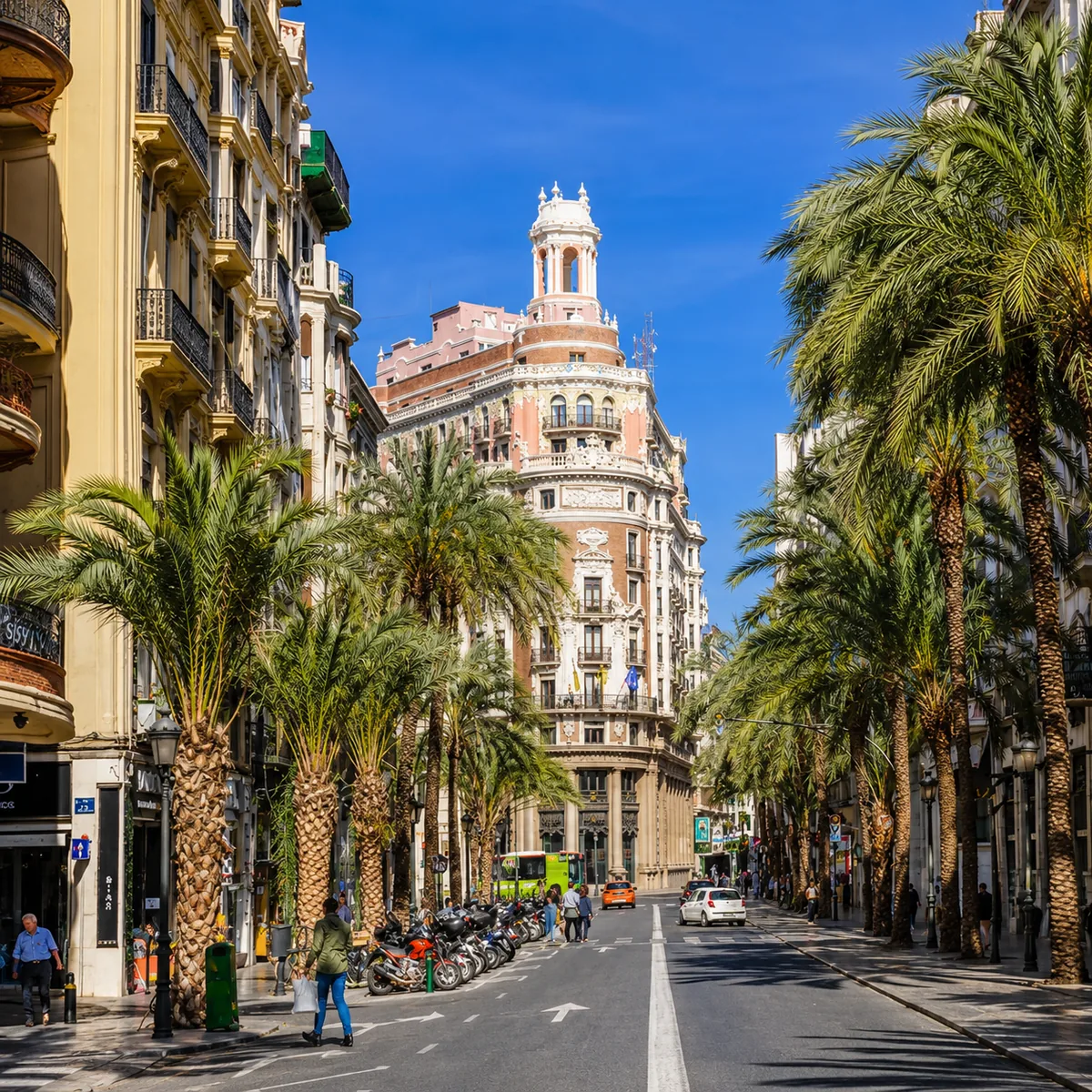
Extramurs, around areas such as Ángel Guimerà, Plaza de España or the streets near the North Station, is often a smart option for those looking for a good location without always paying the prices of the historic heart. You are close to the centre, with good connections and a more functional than scenic kind of local life.
It is not Valencia’s prettiest area, and some streets have more traffic than charm, but it can be very worthwhile if you find a good hotel or apartment. For travellers arriving by train, couples who want to walk to the centre or mid-range stays, it works well.
Areas to look at more carefully
Rather than talking about “bad” neighbourhoods, in Valencia it is better to think in terms of convenience. If you are coming for classic sightseeing, sleeping too far from the centre can make you lose time on transport. Some outlying areas may be cheaper, but they are not always worth it if you only have two or three days.
It is also worth being careful with accommodation very close to nightlife streets in Ciutat Vella or Ruzafa if rest is a priority. At the beach, check carefully whether you are close to public transport and whether your trip depends on the historic centre. A hotel by the sea may sound idyllic, but in winter it may make less sense if your plan is to visit museums, markets and monuments.
In Valencia, the key is not usually avoiding neighbourhoods, but avoiding a location that does not match your trip.
Do you need a car to stay in Valencia?
To visit the city of Valencia, you usually do not need a car. In fact, it can be more of a burden than an advantage: parking in central areas is not always easy, and many sights are best enjoyed on foot, by bike or using public transport.
A car starts to make sense if you want to explore the surrounding area, villages, beaches outside the city or natural spaces such as the Albufera. For an urban break, it is better to choose a good area and travel light.
For an urban break, choosing the right area is usually more useful than having a car.
So, what is the best area to stay in Valencia?
For a first visit, Ciutat Vella is the most convenient and evocative choice. For food, atmosphere and local life, Ruzafa/L’Eixample. For families and a calmer stay, Alameda and the City of Arts area. For the beach and a seafaring feel, El Cabanyal or Malvarrosa. For a balance between price and location, Extramurs.
Valencia is best enjoyed when your accommodation matches your rhythm. If you want monuments, sleep among the bells. If you want nightlife and restaurants, look for Ruzafa. If you need space, look towards the Turia. If you are coming for the Mediterranean, accept being a little farther from the centre and wake up by the sea. Choosing well will not make the city perfect, but it will make it feel more like the trip you are looking for.