What to See in Zurich in 1 Day
One day in Zurich should begin at Zürich Hauptbahnhof, the main train station. From there, the most logical option is to walk down toward the old town. The city gradually opens up: narrow streets, well-kept façades, discreet cafés, watches, expensive shop windows and that Swiss silence that is not emptiness, but order.
The first part of the route can follow Bahnhofstrasse, one of Europe’s best-known shopping avenues. It is not the most exciting place if luxury is not your thing, but it helps you understand one side of Zurich: its financial power, restrained elegance and taste for the immaculate.
Then it is worth detouring to Lindenhof, a quiet hill with beautiful views over the river, the rooftops and the old town towers. It is one of the best places to get your bearings in the city. From there, walk down into the streets of Niederdorf, the oldest side of Zurich, with narrow passageways, small squares and restaurants that become livelier at night.
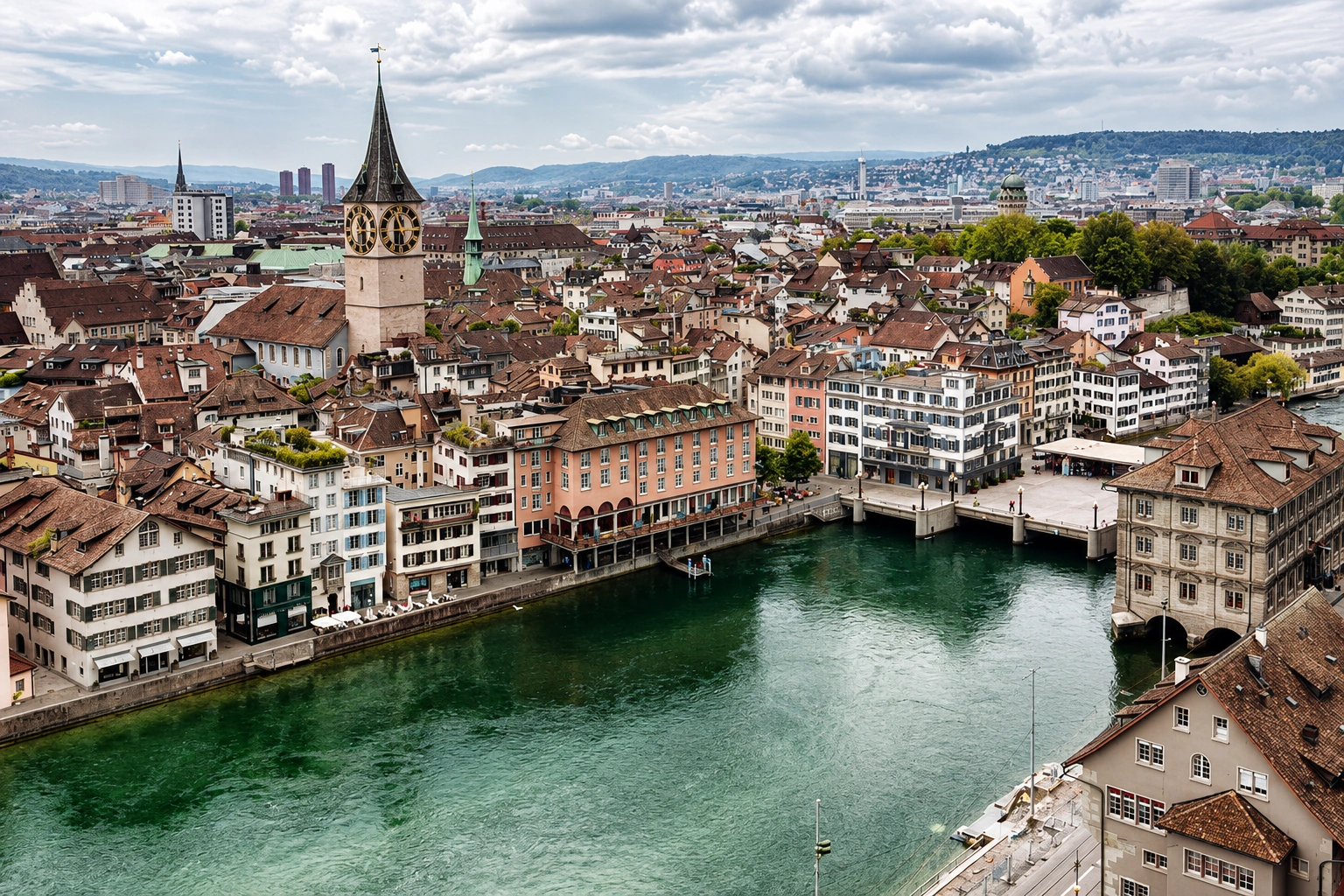
The monumental heart of the city lies beside the river: Grossmünster, Fraumünster and St. Peter form the classic triangle. There is no need to turn the morning into a race through churches; entering one or two is enough, leaving time to admire the Limmat from the bridges. Zurich is best enjoyed from the water: its reflections, its trams crossing over, its pale façades, its bell towers.
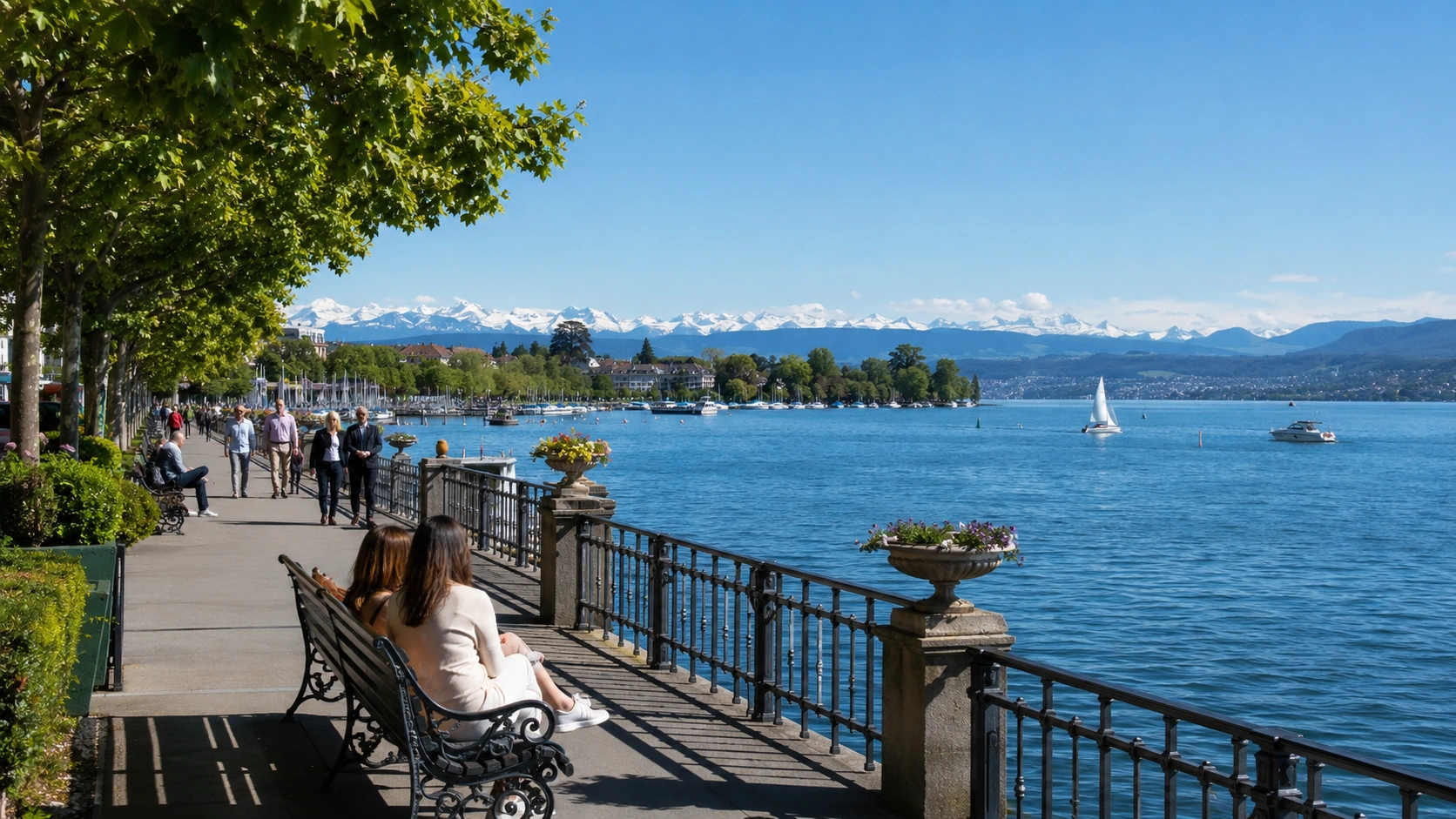
In the afternoon, walk toward Lake Zurich. If the weather is good, the lakeside walk to Sechseläutenplatz and the area around the Opera House is one of the most pleasant moments of the day. In summer, the public bathing areas and urban swimming spots give the city a more relaxed feel than many people expect.
To end the day, go up to Uetliberg, Zurich’s nearby mountain. The Zürich Card includes second-class public transport, travel between the airport and the city, the trip to Uetliberg and some short cruises on the lake or the Limmat for 24 or 72 hours, so it may be worthwhile if you plan to use public transport frequently.
What to See in Zurich in 2 Days
With two days, the first day should follow the classic route: old town, churches, Lindenhof, Bahnhofstrasse and the lake. The second day allows you to discover a less postcard-perfect side of Zurich.
Start at Kunsthaus Zürich, one of the city’s most important cultural attractions. It is especially worthwhile for travelers interested in modern art, European painting and well-designed museums. If you are not a museum person, however, it may not be worth spending half a day there: Zurich has enough open-air walks to avoid going indoors out of obligation.
Then cross over to Zurich-West, a former industrial area transformed into a creative district, with galleries, shops, restaurants, contemporary architecture and spaces around the viaduct. It does not have the old-world charm of the center, but it shows a younger, less banking-focused and more urban side of the city.
In the afternoon, a good option is to visit the Lindt Home of Chocolate, especially if you are traveling with children, as a couple or simply have an interest in Swiss chocolate culture. It is advisable to check opening times and book ahead if you are traveling in high season, on weekends or on public holidays, as it is one of the most popular attractions in the area.
At night, return to Niederdorf or explore Langstrasse if you want a livelier atmosphere. The latter is more nocturnal, multicultural and less polished; it is not generally dangerous, but it may feel less elegant or noisier than the historic center.
What to See in Zurich in 3 Days
Three days is probably the ideal amount of time to get to know Zurich without rushing and add a nearby excursion.
The first day can be devoted to the historic center and the lake. The second, to museums, Zurich-West and chocolate. The third is best reserved for a half-day or full-day trip.
The most logical excursion is Lucerne, a beautiful, compact and more romantic city than Zurich, with its wooden bridge, painted façades and lake surrounded by mountains. It is an excellent combination because it offers a more scenic version of Switzerland without making the trip too complicated. To check up-to-date train times and connections, the most reliable source is SBB, Switzerland’s official rail network.
Another option is to visit the Rhine Falls, especially if you are drawn to natural landscapes and are traveling in spring or summer. They are not enormous waterfalls in the American sense, but they have power, beauty and make for an easy excursion from Zurich.
If you prefer to stay in the city, use the third day to experience it more slowly: have breakfast without watching the clock, go into small shops, stroll through residential neighborhoods, take a short lake cruise or sit by the water. Zurich becomes far more rewarding when you stop “ticking off” sights.
What to See in Zurich in One Week
A week in Zurich does not mean spending seven days only inside the city. The smartest approach is to use it as a base and alternate urban days with excursions.
A balanced route could look like this: Day 1: old town, Lindenhof, Grossmünster, Fraumünster, Bahnhofstrasse and the lake. Day 2: Kunsthaus, Zurich-West, the viaduct, cafés and evening atmosphere in Niederdorf or Langstrasse. Day 3: Uetliberg in the morning and a relaxed afternoon by the lake, with urban swimming in summer or a long walk in colder months. Day 4: day trip to Lucerne. Day 5: Rhine Falls and Schaffhausen, if you want to combine nature with a historic old town. Day 6: Lindt Home of Chocolate, a walk through Kilchberg or an afternoon of museums, depending on your interests. Day 7: flexible day: shopping, markets, a lake cruise, returning to favorite corners or one last excursion if you feel like seeing the mountains.
The advantage of a week is that you can avoid suffering Zurich’s prices by trying to do everything in a rush. The downside is obvious: sleeping and eating there for so many days can push the budget up significantly. For travelers on a tighter budget, it may be better to combine Zurich with nights in smaller Swiss cities or choose accommodation with a kitchen.
Best Zurich Itinerary: The Most Logical Order
The most logical route always begins in the historic center, because it concentrates the city’s visual essence and helps you get oriented. After that, it makes sense to open out toward the lake, go up to Uetliberg and, only once you have understood classic Zurich, explore Zurich-West or the museums.
It is not a good idea to start with outlying areas or pack the first day with excursions. Zurich is not huge, but its best moments are in the transitions: from river to lake, from old town to modern neighborhoods, from tram to viewpoint, from museum to café.
From the airport, reaching the center is simple: trains to the main station run very frequently and the journey takes around 15 minutes, according to Zurich Airport information.
Is Zurich Worth Using as a Base?
Yes, if you are looking for comfort, excellent transport, safety, good museums, refined dining and easy excursions. Less so if your priority is saving money, partying without spending much or finding a dramatic, monumental city. Zurich is beautiful, but not theatrical; refined, but not exuberant; comfortable, but expensive.
It is especially worthwhile for couples, cultural travelers, families who value order and ease, solo travelers and anyone looking for an elegant first introduction to Switzerland. It may disappoint those expecting a cheap, chaotic, highly spontaneous city packed with major monuments at every turn.
FAQs About a Zurich Itinerary
How many days do you need for a Zurich itinerary? Two days are enough to see the main sights at a relaxed pace. Three days allow you to add museums, chocolate, Uetliberg or a nearby excursion. A week only makes sense if Zurich is used as a base for exploring other places in Switzerland.
Can you see Zurich in one day? Yes, but you need to choose carefully: old town, Lindenhof, main churches, a walk along the Limmat, the lake and, if the weather allows, Uetliberg. In a single day, it is best not to overload the schedule with museums.
What is the best day trip from Zurich? Lucerne is usually the most complete option for a first visit, as it combines lake, mountains, historic center and a very recognizable image of Switzerland. The Rhine Falls are also a good alternative if you prefer nature.
Do you need a car for this itinerary? No. For Zurich and many nearby excursions, public transport is enough and highly efficient. Renting a car may be more of a burden than an advantage because of cost, parking and urban traffic.
What is the biggest mistake when visiting Zurich? Trying to experience it as a cheap city or exploring it with an endless list of monuments. Zurich is best enjoyed by walking, using trams, sitting by the water and accepting that its charm lies in precision, calm and detail.
